
𝗣𝗿𝗶𝘃𝗮𝘁𝗲 𝗦𝗲𝗰𝘁𝗼𝗿 𝗟𝗲𝗮𝗱𝗲𝗿𝘀 𝗦𝗵𝗮𝗿𝗲𝗱 𝗩𝗮𝗹𝘂𝗲 𝗶𝗻 𝗢𝗻𝗲 𝗛𝗲𝗮𝗹𝘁𝗵 𝗔𝗽𝗽𝗿𝗼𝗮𝗰𝗵
𝘐𝘯𝘥𝘶𝘴𝘵𝘳𝘺 𝘭𝘦𝘢𝘥𝘦𝘳𝘴, 𝘢𝘤𝘢𝘥𝘦𝘮𝘪𝘤𝘴, 𝘢𝘯𝘥 𝘢𝘥𝘷𝘰𝘤𝘢𝘵𝘦𝘴 𝘤𝘢𝘮𝘦 𝘵𝘰𝘨𝘦𝘵𝘩𝘦𝘳 𝘥𝘶𝘳𝘪𝘯𝘨 𝘵𝘩𝘦 𝘴𝘦𝘤𝘰𝘯𝘥 𝘱𝘢𝘯𝘦𝘭 𝘰𝘧 𝘵𝘩𝘦 𝘖𝘯𝘦 𝘏𝘦𝘢𝘭𝘵𝘩 𝘍𝘰𝘳𝘶𝘮 𝘵𝘰 𝘥𝘪𝘴𝘤𝘶𝘴𝘴 𝘩𝘰𝘸 𝘱𝘳𝘪𝘷𝘢𝘵𝘦 𝘴𝘦𝘤𝘵𝘰𝘳 𝘭𝘦𝘢𝘥𝘦𝘳𝘴𝘩𝘪𝘱 𝘪𝘴 𝘥𝘳𝘪𝘷𝘪𝘯𝘨 𝘴𝘩𝘢𝘳𝘦𝘥 𝘷𝘢𝘭𝘶𝘦 𝘢𝘯𝘥 𝘴𝘺𝘴𝘵𝘦𝘮𝘪𝘤 𝘳𝘦𝘴𝘪𝘭𝘪𝘦𝘯𝘤𝘦 𝘪𝘯 𝘩𝘦𝘢𝘭𝘵𝘩. 𝘛𝘩𝘦 𝘱𝘢𝘯𝘦𝘭, 𝘵𝘪𝘵𝘭𝘦𝘥 “𝙎𝙝𝙖𝙧𝙚𝙙 𝙍𝙞𝙨𝙠, 𝙎𝙝𝙖𝙧𝙚𝙙 𝙑𝙖𝙡𝙪𝙚: 𝙋𝙧𝙞𝙫𝙖𝙩𝙚 𝙎𝙚𝙘𝙩𝙤𝙧 𝙇𝙚𝙖𝙙𝙚𝙧𝙨𝙝𝙞𝙥 𝙞𝙣 𝙊𝙣𝙚 𝙃𝙚𝙖𝙡𝙩𝙝,” 𝘸𝘢𝘴 𝘮𝘰𝘥𝘦𝘳𝘢𝘵𝘦𝘥 𝘣𝘺 𝘋𝘳. 𝘑𝘰𝘩𝘯 𝘑𝘦𝘧𝘧𝘦𝘳𝘴𝘰𝘯 𝘉𝘦𝘴𝘢, 𝘚𝘦𝘯𝘪𝘰𝘳 𝘏𝘦𝘢𝘭𝘵𝘩 𝘗𝘳𝘰𝘨𝘳𝘢𝘮 𝘔𝘢𝘯𝘢𝘨𝘦𝘳 𝘰𝘧 𝘊𝘍𝘐, 𝘢𝘯𝘥 𝘣𝘳𝘰𝘶𝘨𝘩𝘵 𝘵𝘰𝘨𝘦𝘵𝘩𝘦𝘳 𝘴𝘱𝘦𝘢𝘬𝘦𝘳𝘴 𝘧𝘳𝘰𝘮 𝘴𝘦𝘤𝘵𝘰𝘳𝘴 𝘴𝘱𝘢𝘯𝘯𝘪𝘯𝘨 𝘱𝘩𝘢𝘳𝘮𝘢𝘤𝘦𝘶𝘵𝘪𝘤𝘢𝘭𝘴, 𝘵𝘦𝘭𝘦𝘤𝘰𝘮𝘮𝘶𝘯𝘪𝘤𝘢𝘵𝘪𝘰𝘯𝘴, 𝘦𝘥𝘶𝘤𝘢𝘵𝘪𝘰𝘯, 𝘢𝘯𝘥 𝘣𝘶𝘴𝘪𝘯𝘦𝘴𝘴-𝘭𝘦𝘥 𝘥𝘦𝘷𝘦𝘭𝘰𝘱𝘮𝘦𝘯𝘵.
Dr. Besa opened the session by framing the interconnectedness of health, stating that “the boundaries between human, animal, and environmental health no longer exist.” He emphasized that the One Health approach must break sectoral silos and foster strategic partnerships beyond traditional domains.
Panelist Karlo Paredes, Market Access Director & Sustainability of MSD Philippines, highlighted the pharmaceutical company’s long-standing investment in both human and animal health, noting its continued focus on vaccines and antimicrobial resistance (AMR) surveillance in both public and private hospitals. He emphasized the need to reduce treatment costs and strengthen data sharing in hospital settings.
Steph Velasco-Orlino, the Stakeholder Management Head of PLDT & Smart Communications, Inc., discussed how digital infrastructure supports health resilience. She presented initiatives like the Digital Farmers Program and emergency alert systems, which improve disaster preparedness, market access, and environmental stewardship. She noted that true impact comes not just from technology deployment but from sustained behavioral change and co-creation with communities.
From the academic sector, Dr. Geminn Apostol, the Environmental Health Lead of Ateneo Center for Research and Innovation, advocated for systems thinking in leadership training and curriculum reform. He emphasized integrating environmental health in medical education and expanding One Health beyond the usual sectors to include trade, labor, and social development. Apostol underscored the importance of transparency, interprofessional collaboration, and structural reform in enabling sustainable One Health outcomes.
Elvin Ivan Uy, the Executive Director of the Philippine Business for Social Progress (PBSP), showcased how their organization integrates health, climate, nutrition, and education in cross-sectoral projects. PBSP’s approach, he said, is rooted in corporate citizenship and seeks to map needs at the provincial level while mobilizing business partners for scalable impact.
Across the discussion, a common theme emerged: One Health must evolve from being a concept to becoming a funded, operational model. Speakers stressed that collaboration must go beyond compliance or corporate social responsibility. Instead, partnerships should be strategic, rooted in shared ownership, and aligned with community needs.
In closing, Dr. Besa and panelists echoed a key takeaway: “Connect and collaborate with the private sector.” As the country confronts increasingly complex health challenges, the panel affirmed that public-private synergy will be critical to building a healthier, more resilient future for all.
#OneHealth2025 #OneHealthPH
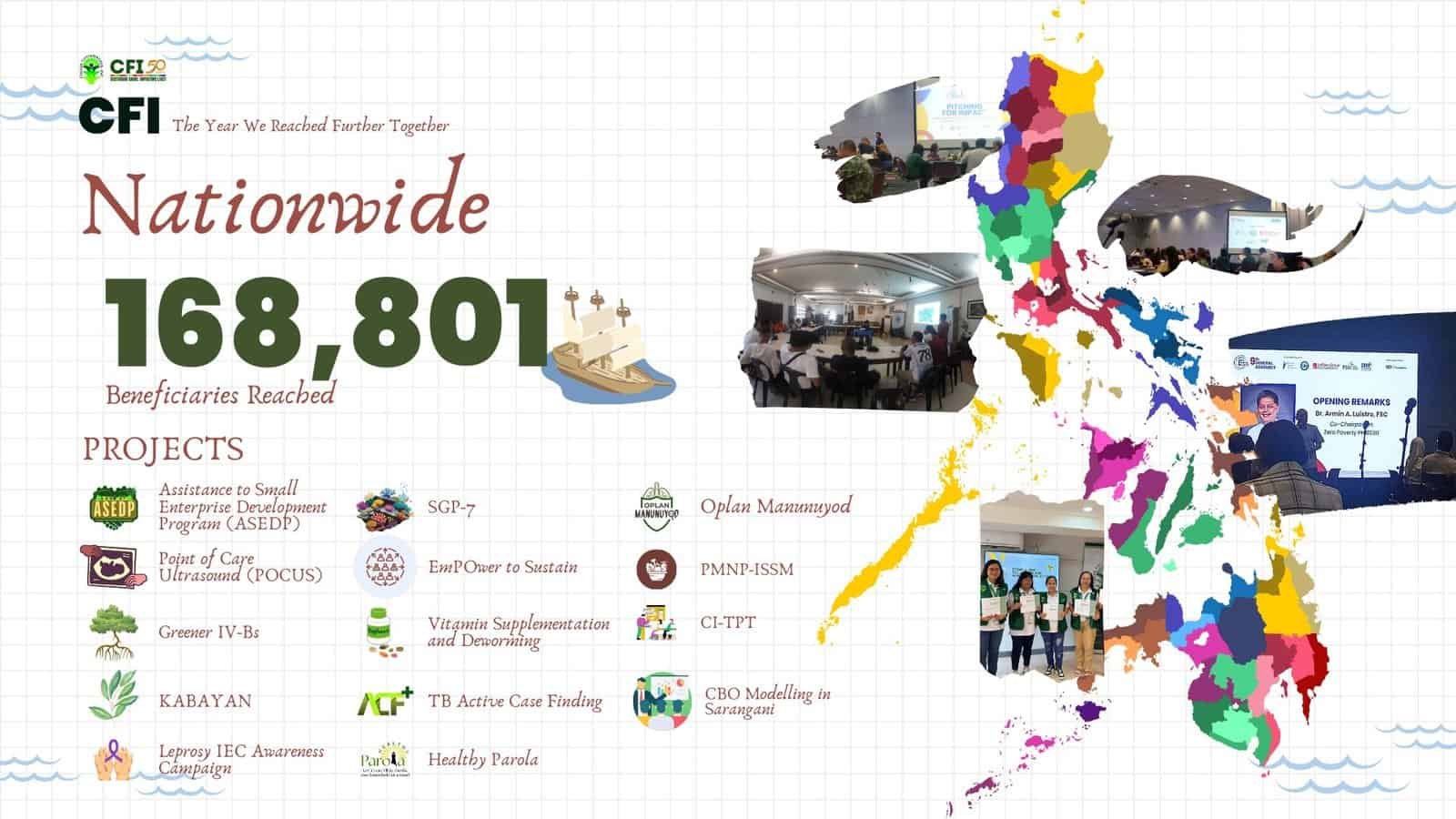
CFI 2025: The Year We Reached Further Together – NATIONWIDE
As of October 31, Culion Foundation, Inc. (CFI) has reached 168,801 beneficiaries across seven regions, from MIMAROPA to CARAGA, through the collective support of our donors, LGUs, communities, other non-government organizations, and national government partners....